THE G.U.I.D.E. COHORT
Your team isn't the problem. Your undefined handoffs are.
Operational infrastructure for Custom Integrators, built in twelve weeks.
Every growing Custom Integration firm hits the same wall and it's built from invisible work. The handoff from sales to production that never quite happens. The final 5% of the job nobody owns. The processes that live in your head, so everything routes back through you.You've tried software. You've tried hiring. Neither held because the structure was never defined. You can't automate or delegate what isn't written down.
G.U.I.D.E. is how you see your operation clearly, then build the structure it's missing.
We start by visualizing how work actually moves through your company, not how you think it does. G.U.I.D.E. walks that path in order. Each step builds on the one before it.
G — Get Visibility -Map how a job really flows through your company, from the client's first call to closeout.U — Understand Flow -Trace the real process step by step. Where does work stop? Where does it get handed off? Where does it break?I — Identify Gaps -Find the broken handoffs, the unclear roles, the communication that never happens and rank them by what's actually costing you.D — Define Standards- Build the SOPs and checklists that fix the gaps that hurt, not documentation for its own sake.E — Execute with Cadence- Put it into a weekly rhythm with clear owners, so the structure runs instead of sitting in a binder.You don't standardize a process you haven't mapped. That's why the order matters and why most process efforts fail.
The next cohort starts August 26th.
Register before August 7th and get 2 free 1 on 1 Bonus Sessions!
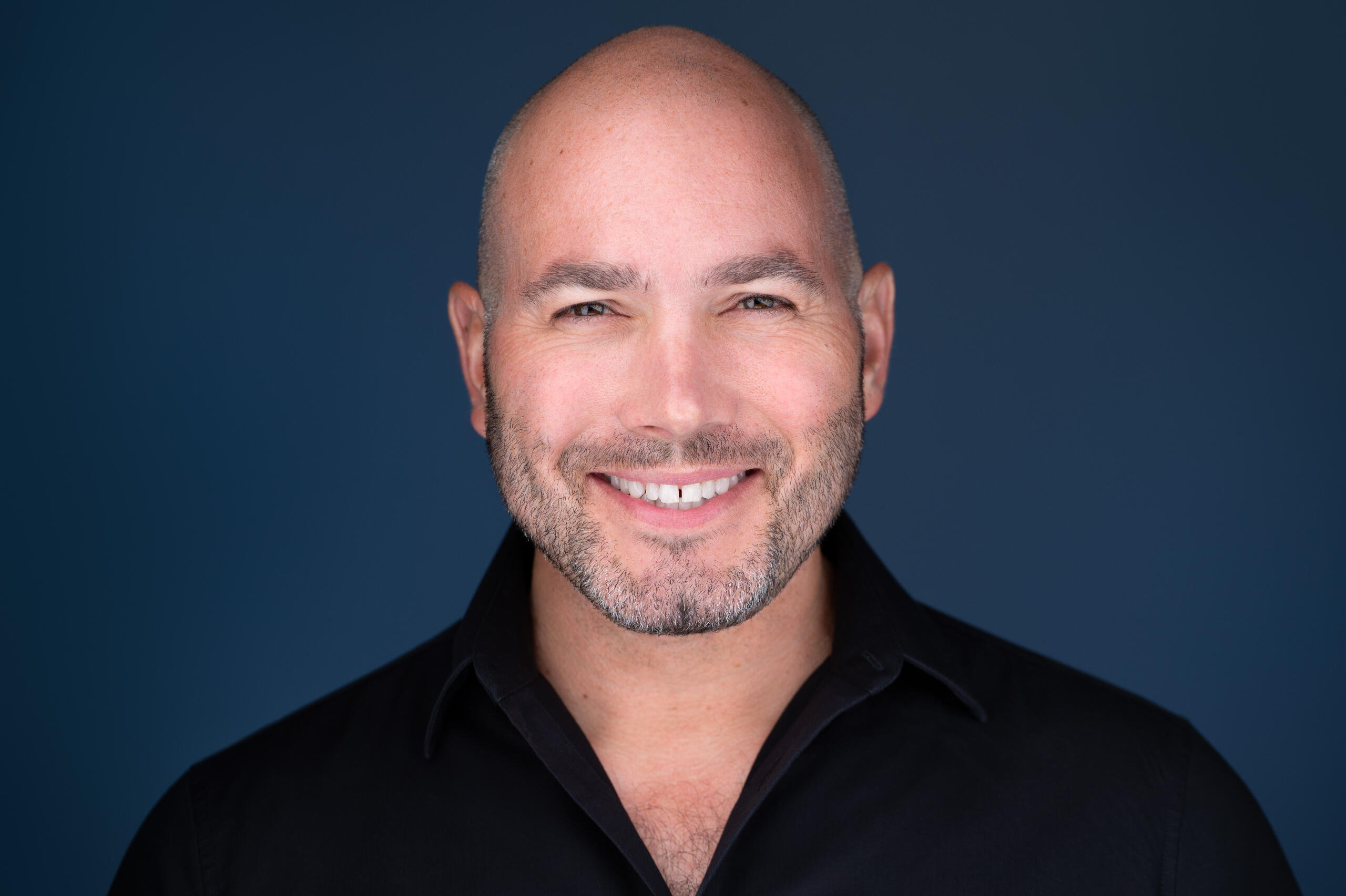
Hi, I'm JasonCreator of the G.U.I.D.E. Cohort, Lean Six Sigma Black Belt, and Process Architect at I am Sayen with 30+ years in the CI industry.I've spent my entire career in luxury consumer electronics, working with hundreds of CI firms from solo operators to companies with 100+ employees across multiple divisions. No matter the size, one thing was always true, they didn't have the operational structure to support their growth.And the same issues kept showing up. Siloed teams. Miscommunication. Chaotic handoffs. Inconsistent execution. Frustrated project managers. Tribal knowledge locked in a few people's heads.Despite all the software, all the checklists, all the meetings, nothing really changed.My turning point came when I became a Lean Six Sigma Black Belt and finally saw operations for what they are: A flow. A system. A set of habits that either support growth or quietly sabotage it.That's what this cohort is built on.
Invisible work creates guesses. Guesses create miscommunication. And miscommunication is expensive: poor workplace communication costs an estimated $12,506 per employee, per year.¹It shows up as three things nobody made clear: HOW the work gets done, WHO does it, and HOW your software is supposed to help. That's exactly what G.U.I.D.E. makes visible.
For a 10-person company, that's a $125,000 annual leak. A seat in this cohort is $1,000...one recovered truck roll, one change order billed instead of eaten, and it's paid for.¹ Grammarly × The Harris Poll, State of Business Communication, 2022.
The G.U.I.D.E. Cohort Overview
Seven sessions. Every other week over three months. You leave every session with something you built.
Session 1 - Set the Foundation
Get oriented, meet your cohort, and get paired with an accountability partner. You'll name who inside your firm owns making this stick before the work starts.Session 2 - Get Visibility
Map how work really flows. Build a current-state view of a job moving through your firm. See the whole path for the first time.Session 3 - Understand Flow
Trace the process, find where it breaks. Use proven mapping tools to walk your real process step by step and expose where work waits, stalls, or gets dropped.Session 4 - Identify Gaps
Rank what's actually costing you. Turn the map into a prioritized gap report across process, roles, and communication.Session 5 - Define Standards
Build the SOPs that matter. Create the standards and checklists that close your highest-cost gaps. Start with industry standard templates already built. You don't start with a blank piece of paper.Session 6 - Align Your Software
Now we talk software. Audit your stack against the process you just defined — where work moves by hand, where a handoff depends on someone remembering, where you're paying for a tool doing half a job. Then build the roadmap to fix it. The question this session answers: is it configured, or is it assumed?Session 7 - Execute with Cadence
Put it on a weekly rhythm. Build the meeting cadence, the agendas, and the owners that keep the structure running. Then commit, each of you shares your 30/60/90/180 Day plan with the room and leaves with a partner holding you to it.Every session includes live Q&A and breakout rooms for collaboration.
The next cohort starts August 26th.
Register before August 7th and get 2 free 1 on 1 Bonus Sessions!
By the end, you'll have built the operating structure your firm has been missing
Your client journey, defined. Every handoff documented. One accountable owner on every task. A weekly cadence that keeps it running.You build it in the room with a cohort of integrators fighting the same fires. And it pays you back on every project that flows through it, starting with the next one you sell.
Document your operation, and you own something most Custom Integration Companies never will.
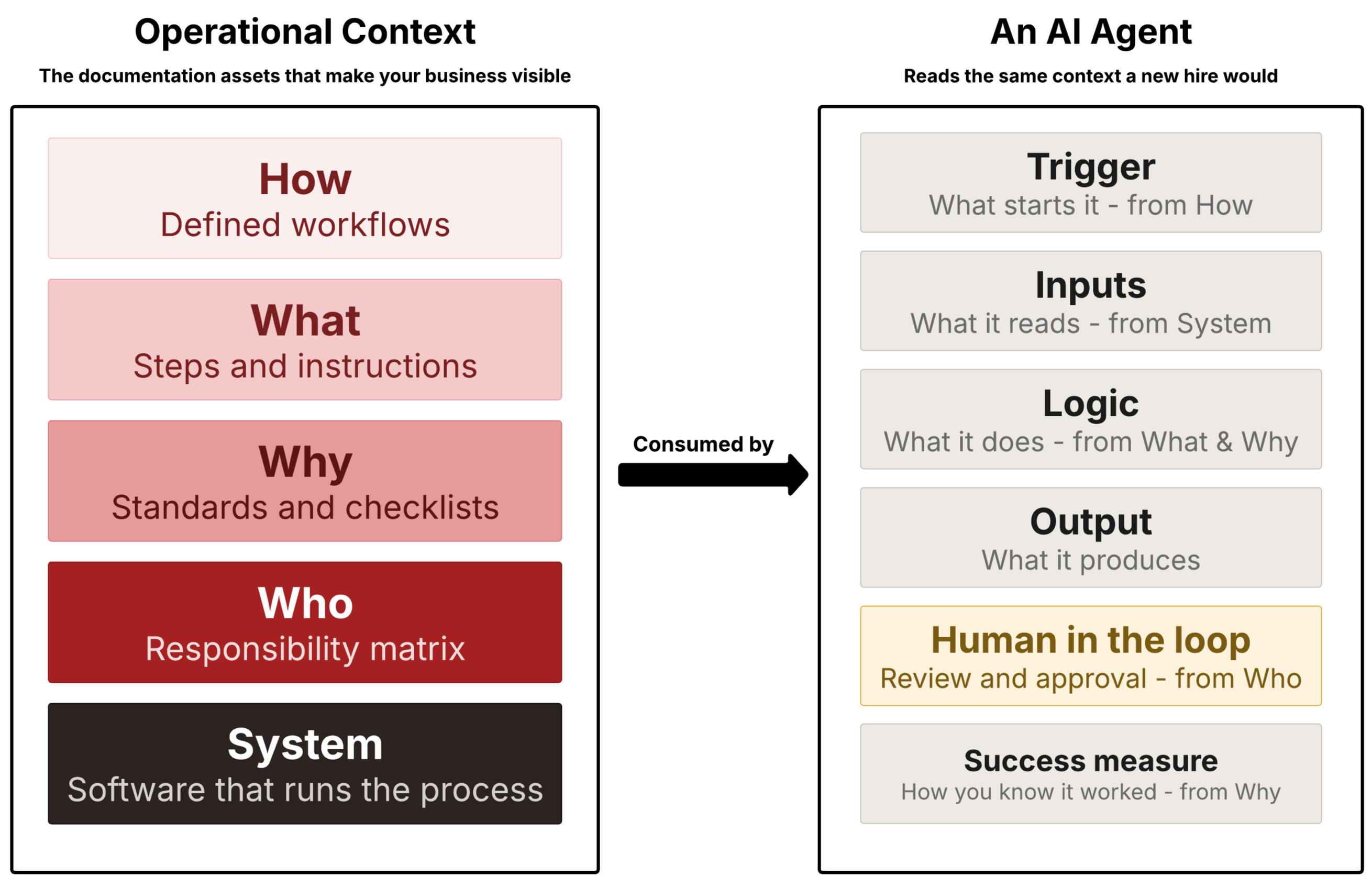
Everyone's racing to bolt AI onto their business. But the firms that win with AI won't be the ones that adopted it first, they'll be the ones that documented their operations first and built Operational Context.This isn't an AI course. It's the thing that has to happen before AI is worth anything. The documents you build here capture how your business actually works and are usable with any tool you choose, now or later.Your client journey, your SOPs, your responsibility matrix, that's the context. Hand it to any AI tool and it can finally answer questions about your business instead of giving you generic advice.
Let's be honest, this is DIY.
You have to show up and do the work.
This isn't a "Jason fixes your business while you're out running jobs" situation. You show up. You engage. You do the assignments. You build the habit of working on your business, not just in it. The tools are powerful. The framework works. The community is supportive. But none of it matters if you don't use it.If you want a silver bullet, this isn't it.If you want a real operational shift, this is where it starts if you're willing to put in the work and throw out the old habits.
You leave with a single source of truth you can turn into your Operations Manual
Client Journey Workflow to see where work gets stuck
Project Management Workflow and Playbook to align production
Employee Responsibility Matrix to clarify roles
36+ editable SOPs & checklists for key milestones
Client Experience + communication templates to set expectations
Project Status Review template for meetings that actually move work
Lifetime access to the cohort Slack community
A member hub for recordings, homework, and documents
Weekly homework that builds the habit, not the busywork

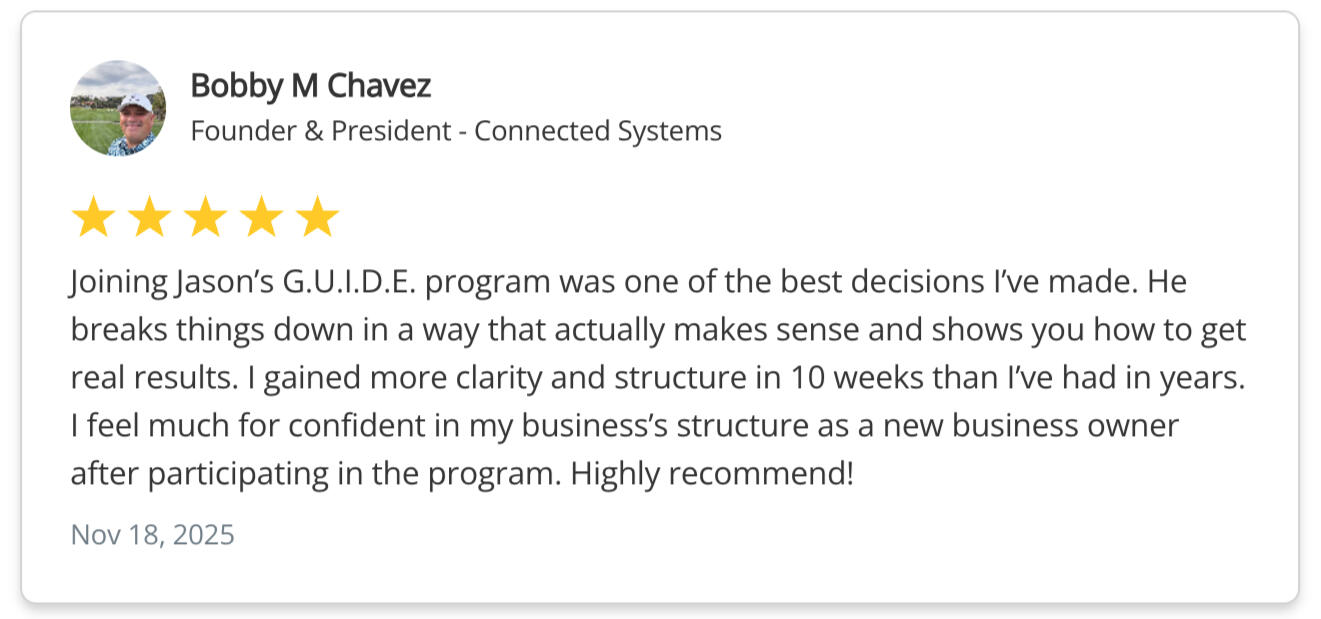
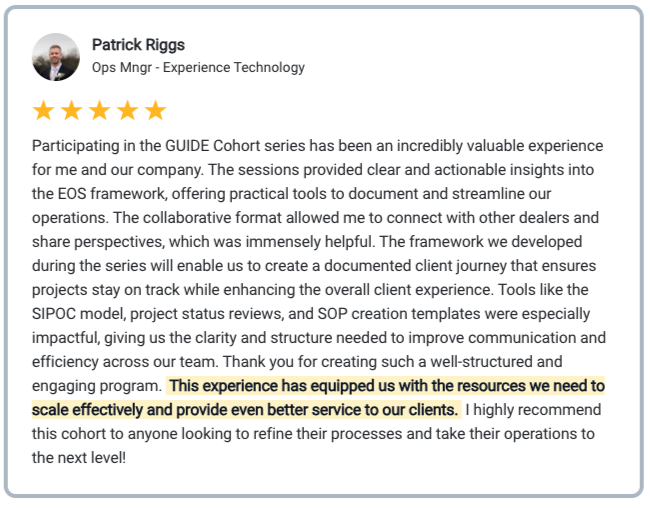
Nothing changes until you do. This is where it starts.
$1,000 per person. Limited to 16 seats. The next cohort starts Wednesday, August 26th.
Register before August 7th and get 2 free 1 on 1 Bonus Sessions!
Frequently Asked Questions
How much does it cost? $1,000 per person.
How long is the cohort? Seven sessions, every other week over three months.
My company runs on EOS, is this still helpful? Yes. Process is one of EOS's six components; the cohort takes that area deeper than EOS does.
How long do I get Slack access? Forever.
How many people are in the cohort?. Capped at 16. Additional cohorts open if demand exceeds capacity.
Do I have to attend every live session? Yes, but situations happen so if you miss the live collaboration with the room, sessions are recorded.
Will the templates be editable? Yes, all of them.
Can't AI just do this for me? Not yet. AI can only work from what your business has documented. This cohort builds that. It's the prerequisite, not the competition.
What if I've tried building processes before and it didn't stick? Most processes fail because they're built in isolation, on top of a flow no one mapped. Here we start with an industry standard map first, build second, and get accountability to follow through.
Does this replace working with Jason 1:1? No. The cohort gives you the framework and tools for you to implement. It's the most cost-effective way to start. Attendees get a discount on 1:1 services post Cohort.